When Advocacy Silences: Confronting the Harms of Child Welfare Abolition
Introduction
The US child welfare system is a continuum of services designed to protect the well-being of children by promoting safety, achieving permanency, and strengthening families. Yet, decisions made at all levels of the child welfare system, from policy, to court proceedings, to individual-level case management, often do not include the voices of individuals with lived experience in these systems. There is presently much discourse about systematic reform among child welfare scholars, practitioners and policymakers, and it is essential that this discussion is informed by incorporating the input and expertise of those who have first-hand experience living within these systems. These individuals have a unique understanding of where reforms may be needed.

Spotlight on L. Patty Flores, MSW, ASW
L. Patty Flores is a former foster youth, who has navigated the US child welfare, juvenile justice, education, housing, and immigration systems. Patty came to the US as an undocumented Salvadorian immigrant. She spent a large amount of her childhood in foster care before entering the juvenile justice system by the age of 18. Determined to not let others define her, she graduated high school and enrolled in college while incarcerated. She continued to pursue higher education and obtained a Master of Social Work degree from Smith College. Patty’s story depicts what it is like for marginalized individuals to face continuous adversity. Growing up at the intersection of complex social systems, Patty set goals to empower those who encountered similar obstacles in life.
In her recently-published article in Families in Society, “Addressing Epistemic Injustice: A Counter Perspective to Child Welfare Abolition From a Former Foster Youth,” Patty shares intimate details of her lived experience and how it informs her views on the discussion of child welfare abolition, or the eradication of formal child welfare services and instead promoting the development of community-led safety net services and supports. She notes that abolitionists do not value cases where the system successfully intervenes and protects the child’s safety. She explores the power imbalance between established child welfare experts and vulnerable youth in care. This imbalance pushes out the voices of the youth, when they should be prioritized and included. Furthermore, she mentions the lack of concrete, evidence-based solutions imagined in a post-abolition world. Dismantling the system without having a clear process on how children will be protected in cases of abuse and neglect leaves more children at risk.
 Recap of the Field Center Fall 2025 Symposium
 Recap of the Field Center Fall 2025 Symposium
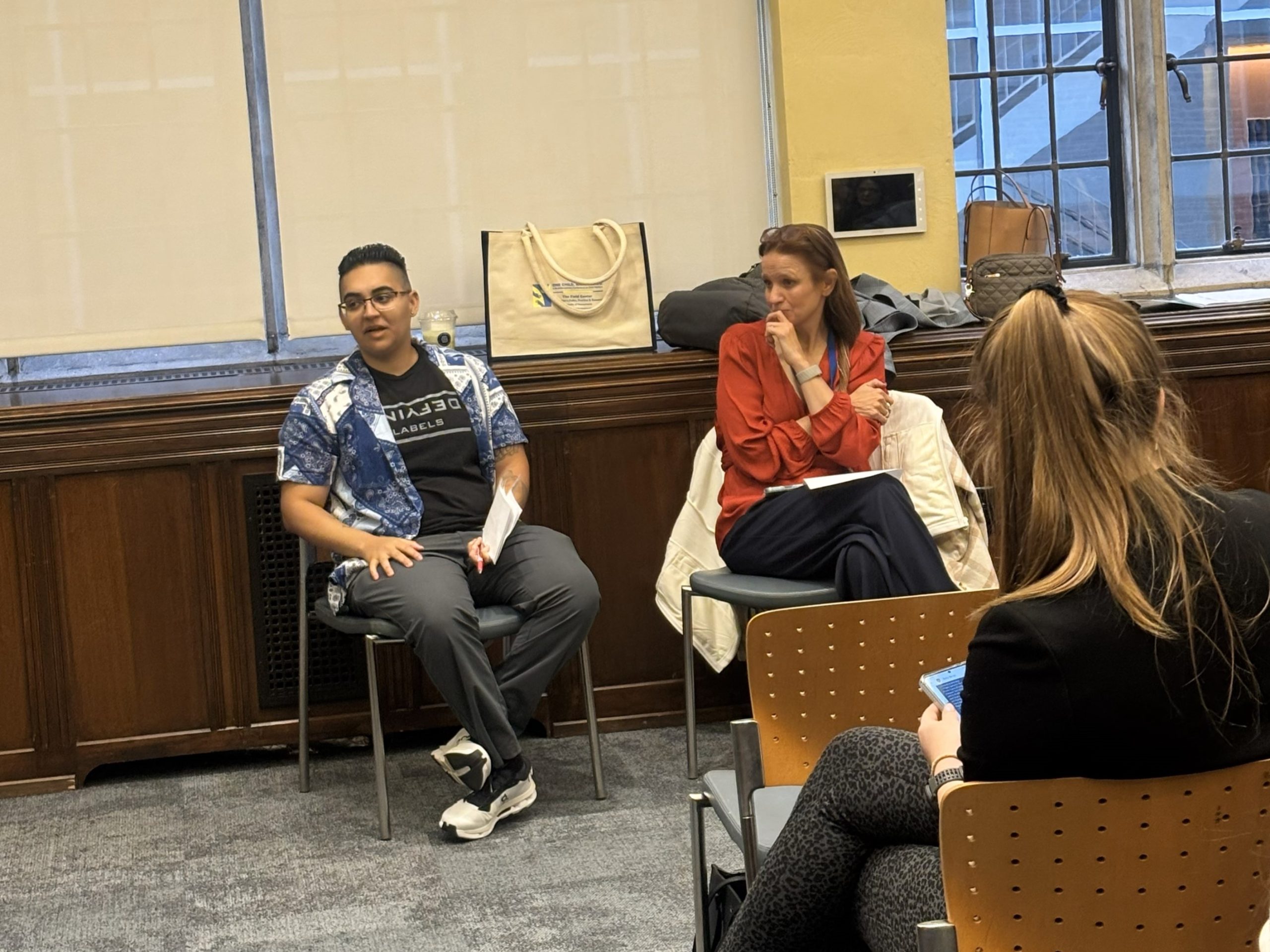
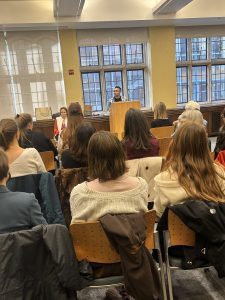
The Field Center hosted Patty for the Fall 2025 Community Symposium, an event that brought together university students, practitioners, child welfare experts, and local stakeholders to unpack the potential impact of child welfare abolition. Patty met the audience with candor, speaking openly about her experiences while demonstrating her refusal to give up in the face of adversity. She defined lived experts as being “experts of the systems from within” which allows for youth in care to reclaim authorship of their stories. She discussed how primarily holding the conversation of child welfare abolition in academic settings leaves out the voices of young people in care. Those voices deserve to be included, as they bring humanity into the conversation. At the end of the day, the discussion of reform versus abolition weighs most heavily on the lives of the children living within the bounds of the child welfare system. Their voices, their experiences, and their lives are inherently valuable and deserve to be regarded as such.
An Abridged Q&A with L. Patty Flores
To showcase Patty’s thought-provoking ideas, an abridged Q&A from the Symposium is presented below.
What inspired you to write this piece, and what conversation were you hoping to shift through it?
I was inspired to write this piece because I continued to witness forms of oppression coming from people in positions of power within academia, often from those who claim to be advancing “social justice.” As someone with lived experience in the foster care and legal systems, I saw how the voices of people like me were still being marginalized, dismissed, or extracted for academic gain. Through this piece, I hoped to shift the conversation by naming these dynamics directly and challenging the field to confront its own epistemic injustices. My goal was to create space for foster youth, system-involved youth, and other marginalized communities to be heard not as subjects of study, but as knowledge producers who should shape the research that impacts their own lives.
How does your lived experience shape the way you approach research, practice, and advocacy?
My lived experience is the foundation of how I approach research, practice, and advocacy. Moving through the child welfare system, the juvenile system, and the immigration system has given me an embodied understanding of how policies, institutions, and power imbalances shape a young person’s life. Because I have been on the receiving end of these systems, I approach research with a deep sense of responsibility—to produce knowledge that is accountable to the youth most affected, not just to academic audiences.
In practice, it keeps me grounded, trauma-informed, and relational. In advocacy, it reminds me that change must be both structural and human, and that young people’s stories are not data points—they are realities that deserve dignity, complexity, and action.
You often talk about “centering lived experience” – what does that look like beyond simply including voices?
Centering lived experience goes far beyond asking people to “share their stories.” It means shifting who holds power, who sets the agenda, and who defines what counts as knowledge. To me, centering lived experience means:
- Co-creating research, not just extracting data—youth help design questions, interpret findings, and decide how results are used.
- Redistributing power, ensuring that youth are compensated, credited, and respected as experts.
- Creating trauma-informed research spaces where participation does not cause further harm.
- Letting youth shape solutions, not just describe problems.
- Recognizing lived experience as a form of expertise equal to academic training, not secondary to it.
In practice, it means building research and advocacy with youth rather than about them—and ensuring that institutions are willing to change in response to what youth identify as needed.
Conclusion
 Conclusion
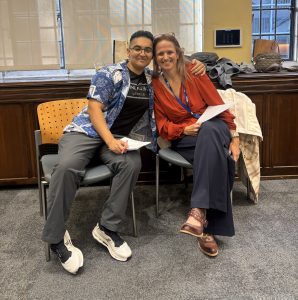
The pathway towards child welfare reform is nuanced, and there is not simply one solution. Learning from Patty’s advocacy, it’s important for lived experts to be included in transformation. Reform cannot be handled by a single entity but instead requires authentic representation of all important stakeholders of the child welfare system.
References
Flores, L. P. (2025). Addressing Epistemic Injustice: A Counter Perspective to Child Welfare Abolition From a Former Foster Youth. Families in Society: The Journal of Contemporary Social Services, 106(2), 474–479. https://doi.org/10.1177/10443894241297210